Healthy, radiant skin is often described as “glowy” or smooth—but what we see on the surface is shaped by what’s happening beneath. In Singapore’s climate, where strong UV exposure, humidity, and environmental stressors are daily realities, supporting deeper skin structures is becoming an important part of long-term skin maintenance.
If you’ve been exploring skin rejuvenation treatments, you may have come across options like Salmon DNA skin boosters (also known as Polynucleotides or PN injectables). Once unfamiliar, these treatments have quickly gained popularity as more people shared their results and experiences.
Alongside these, ECM skin boosters have also started gaining attention among doctors and patients in Singapore. Developed in Korea, this treatment focuses on supporting the skin’s extracellular matrix. This is the structural network that helps maintain collagen, elastin, and overall skin strength, especially in environments with high UV exposure and humidity.
In our earlier guide on ECM in skin ageing and repair, we explored how this matrix changes over time and influences the skin. Building on that, this article focuses on how ECM skin boosters work, what benefits they offer, and what you can realistically expect from treatment.
ECM stands for Extracellular Matrix, a network within the skin that supports collagen, elastin, and other proteins. Think of it as the scaffolding that keeps skin firm, smooth, and resilient.
Over time, factors such as ageing, UV exposure, environmental stressors, and lifestyle habits can affect this network. In Singapore’s climate, where sun exposure and humidity are constant, these changes can become more noticeable over time. The skin may gradually appear thinner, less elastic, and more uneven in texture.
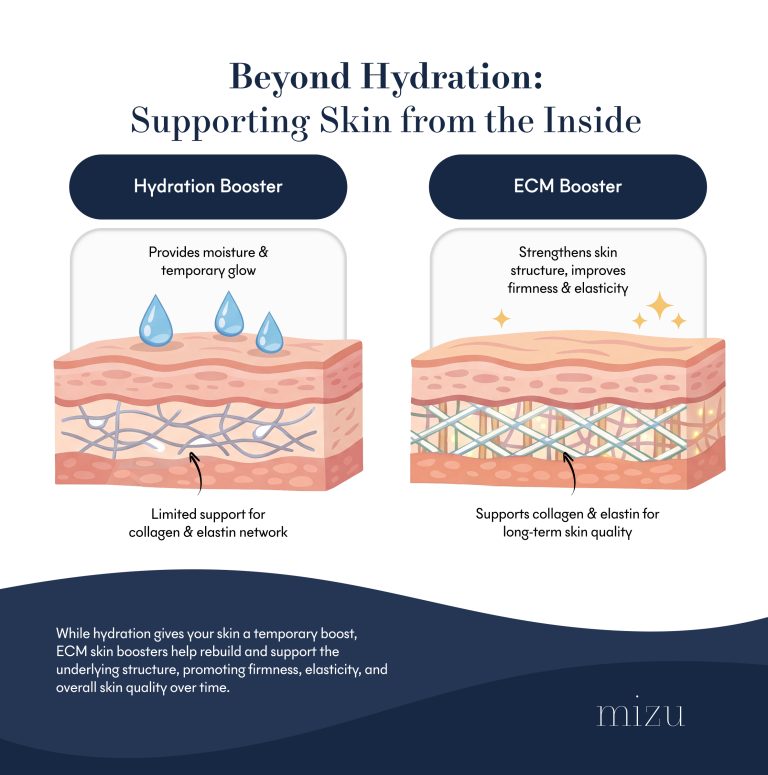
Earlier generations of skin boosters focused mainly on hydration, often using ingredients like hyaluronic acid to improve moisture levels in the skin. ECM skin boosters take a slightly different approach.
Instead of focusing only on hydration, they are designed to support the skin’s underlying structure, helping to create a healthier environment for collagen and elastin activity. This means the focus is not just on how the skin looks immediately after treatment, but also on supporting overall skin quality over time.
ECM skin boosters work through targeted micro-injections into the dermis, the layer where collagen, elastin, and ECM are located. By acting directly at the structural level, they support processes associated with collagen remodelling and skin repair.
While ECM skin boosters may provide immediate plumpness in injected areas, in truth, they work gradually to support long-term improvements in skin quality.
Understanding what happens during an ECM skin booster session can help set realistic expectations. While experiences may vary between individuals and clinics, a general session typically involves the following:
Most patients describe the procedure as tolerable, with minimal discomfort during treatment. There may be mild swelling and tenderness for 2 to 3 days post-treatment.
Some individuals may notice several skin quality improvements following ECM skin booster treatments:
Common benefits include:
In practice, this may present as skin that looks more even, feels supple, and gradually appears healthier over repeated treatments.
Outcomes can vary depending on your skin type, age, and treatment approach. Patients may notice early changes such as:
Because ECM boosters act on biological processes within the skin, results develop gradually rather than instantly. This makes them suitable for patients seeking long-term improvements rather than temporary volume or hydration alone.
Because ECM skin boosters work on a biological level rather than providing instant cosmetic changes, understanding the typical progression can help manage expectations:
Individual outcomes will vary, and a medical professional can provide guidance on what timeline and results may be realistic based on your skin condition.
The duration of results varies depending on factors such as age, lifestyle, skin condition, and treatment protocol.
Some individuals may notice improvements for several months following an initial treatment series. Maintenance sessions may be recommended to support continued skin quality over time.
As collagen production naturally declines with age, periodic treatments may help maintain these effects.
Several lifestyle and environmental factors may influence how long results last. These include:
While individual responses to treatment vary, the following general practices may help support the longevity of ECM skin booster results:
ECM skin boosters are generally considered for individuals with concerns about:
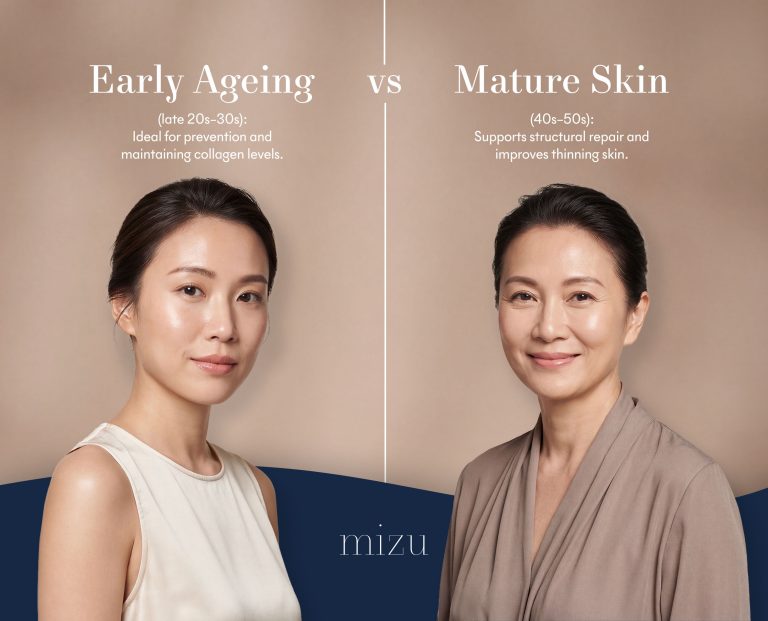
While many individuals begin exploring such treatments from their late 20s onwards, suitability is generally determined more by skin condition than age alone.
Younger individuals may explore ECM-based treatments as part of preventative care, while others may consider them when addressing changes in firmness or skin texture.
Suitability is determined more by skin condition than age alone. A consultation with a qualified medical professional is recommended to confirm whether ECM boosters align with your concerns and expectations.
Most treatment protocols involve an initial series of 2–3 sessions, spaced a few weeks apart. The exact number may vary based on individual skin condition and treatment goals. A medical professional can recommend the most appropriate plan during a consultation.
Downtime is usually minimal. Some patients may experience mild redness, small injection bumps, minor swelling, or occasional bruising, but these effects typically resolve within a few days. Many individuals resume normal activities shortly after treatment, although you are recommended to avoid exercise and alcohol for at least a day.
ECM skin boosters are derived from purified human donor tissue and are hence designed to be highly biocompatible with the skin, allowing them to integrate naturally with the skin’s structure. They are generally considered safe when performed by qualified medical professionals following a proper assessment to ensure suitability and minimise potential risks.
ECM skin boosters can be combined with other treatments to support overall skin quality and address different concerns at the same time. Because each treatment works in a different way, combining them can help achieve more balanced results. For example, they may be paired with non-invasive skin tightening treatments like HIFU or radiofrequency, laser treatments for pigmentation, RF microneedling for texture, or hyaluronic acid skin boosters for hydration, as each works in a complementary way. The most suitable approach, including timing and sequence, is determined during a personalised consultation.
For individuals exploring treatments that provide anti-ageing rejuvenation, ECM skin boosters may be one option to consider.
By supporting the skin’s structural environment, these treatments aim to improve overall skin quality in a gradual and natural way.
That said, skin boosters are not all the same. Some focus primarily on hydration, while others support collagen or broader structural processes within the skin. Understanding these differences can help guide a more considered approach to treatment selection.
In the next part of this series, we take a closer look at how different types of skin boosters compare and how to choose one based on your skin concerns and goals.
At Mizu, each patient undergoes a personalised consultation to assess skin condition and determine which type of skin booster, including ECM-based treatments, may be appropriate.
Book a consultation to learn more about ECM skin booster treatments in Singapore.
The information provided in this blog post is for educational and informational purposes only and should not be considered medical advice. Always consult with a healthcare professional or dermatologist before starting any new skincare routine or treatment, especially if you have existing skin conditions or concerns. Results may vary from person to person, and individual needs may require different approaches.
Dr Tan Ying Zhou, known as Dr YZ Tan, is the founder and Medical Director of Mizu Aesthetic Clinic.
His journey into aesthetics began with a medical degree from St. George’s, University of London, followed by an internship in Dermatology at the National Taiwan University Hospital.
Some of his favourite aesthetic procedures include nose augmentation and anti-ageing solutions, and he also serves as a trainer for emerging aesthetic doctors.
His philosophy revolves around personalised treatments tailored to each individual’s ageing concerns, aiming to transform the ageing process gracefully into a pleasant journey towards confidence and wellness.