Quick Answer: Skin boosters in Singapore generally fall into three categories — hydration-based (typically using hyaluronic acid), collagen-stimulating, and ECM (extracellular matrix)-based. Each works on a different layer of the skin and addresses different concerns. There is no single “right” skin booster; suitability is determined by a doctor’s assessment of your skin condition, age, lifestyle, and goals.
If you’ve started exploring aesthetic treatments, you’ve probably come across the term skin booster. It’s often used broadly — and sometimes interchangeably — to describe a range of injectable or regenerative treatments offered at an aesthetic clinic in Singapore.
This can make it difficult to answer a simple question: which skin booster is suitable for me?
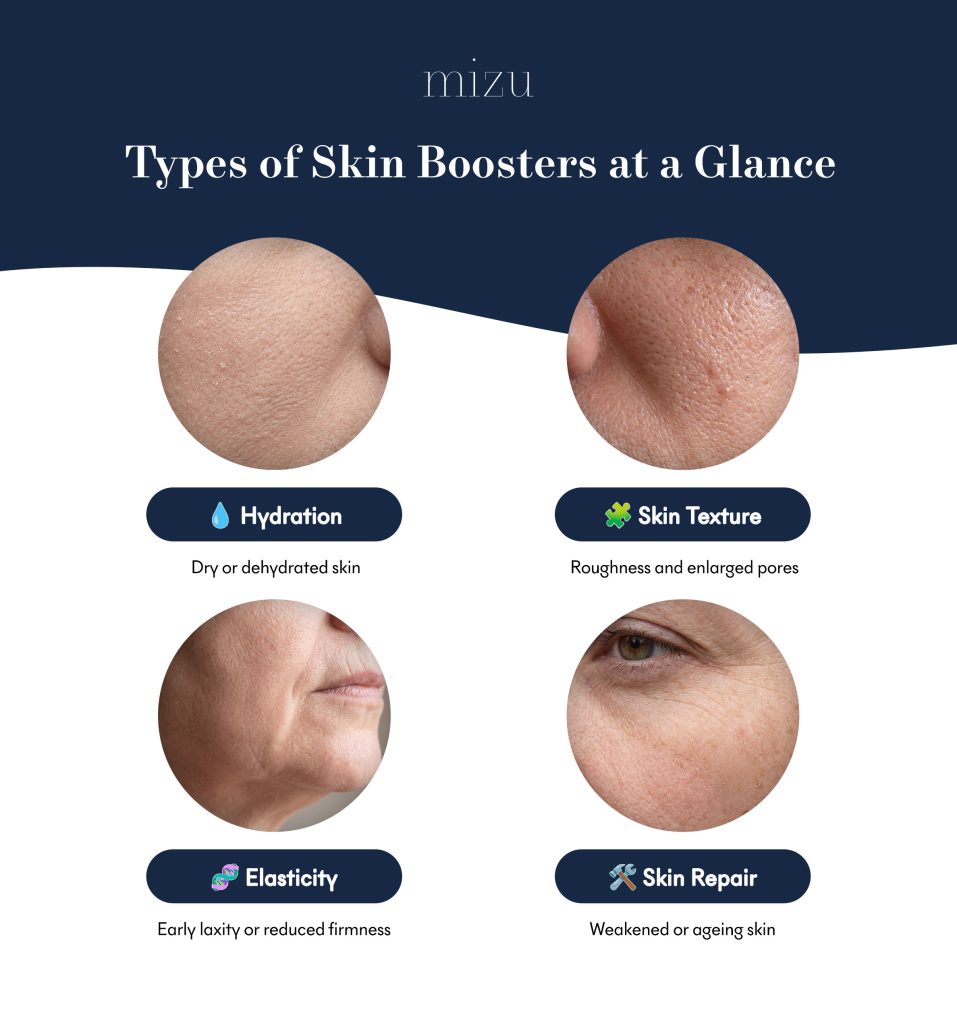
The reality is that not all skin boosters work the same way. Some focus on hydration, while others aim to support collagen production or improve the skin’s underlying structure. Understanding these differences is important for selecting a treatment that aligns with your specific skin concerns rather than current trends.
This guide explains the main types of skin boosters, how each works, and what to consider if you’re exploring treatment for the first time.
Skin boosters are injectable treatments designed to help improve overall skin quality by delivering active ingredients into the skin. While traditional dermal fillers are often associated with volume enhancement in specific areas, skin boosters are typically used to support skin health more broadly.
They are commonly used to address:
However, results may vary depending on the type of skin booster used, individual skin condition, and the treatment plan. This is because each formulation targets a different aspect of skin biology. Some work closer to the surface, while others act deeper within the skin’s support structure.
Understanding the differences between skin boosters is helpful when discussing options with your doctor.
These are among the most commonly known skin boosters, especially for first-time patients exploring dull skin concerns.
Best suited for:
Limitations:
Hydration-based boosters primarily work by attracting water into the skin. While this can improve skin appearance, the effects are usually limited to the more superficial layers.
These treatments aim to activate the skin’s natural repair processes.
Best suited for:
What to expect:
Collagen-stimulating boosters work by encouraging fibroblasts to produce new collagen. This process, known as neocollagenesis, takes time, which is why results develop gradually. Bio-remodelling treatments are sometimes also discussed in this category, as they are designed to support collagen and elastin in the skin.
A newer category gaining attention is ECM (extracellular matrix)-based skin boosters, such as the ECM Skin Booster available at Mizu.
The extracellular matrix (ECM) is the framework that holds skin cells, collagen, and elastin together. Over time, this structure weakens, contributing to thinning, laxity, and reduced resilience.
Best suited for:
Potential benefits:
Unlike hydration-based options, ECM skin boosters are positioned as foundational treatments that focus on improving the skin environment itself, rather than surface appearance alone.
Read more: ECM Skin Booster Explained: How It Works, Benefits, Results & Who It’s For
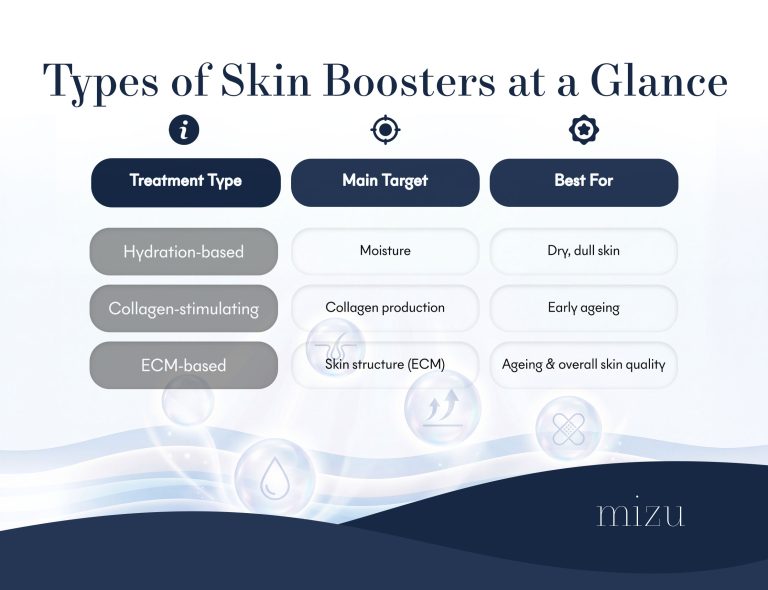
The table below summarises how the three types differ. This is intended as a general guide — your doctor will help determine what’s most appropriate for your skin.
If you’re unsure which skin booster may suit you, it can help to consider your primary concern:
Rather than searching for a single “ideal” option, it is more useful to consider what your skin needs at a biological level. A consultation with a qualified doctor is the most reliable way to determine this.
In some cases, different types of skin boosters may be used together as part of a broader treatment plan. For example:
This layered approach may be considered when a patient has multiple skin concerns. However, treatments are typically spaced and planned carefully.
Combination treatments should always be guided by a qualified healthcare professional to ensure:
Multi-step treatment plans, such as the Mizu Signature Radiance Revival and Mizu Signature LumiLift, are sometimes explored in clinic for patients with overlapping concerns.
In Singapore, skin booster treatments are typically offered in medical aesthetic clinics and may vary in formulation and approach.
A consultation is usually required to:
If you are considering treatment, you may explore skin booster options at Mizu, including Salmon DNA Skin Boosters and the ECM Skin Booster, before deciding on your next steps.
A suitable treatment plan is usually based on several factors:
1. Skin Assessment ~ Doctors at Mizu evaluate hydration levels, elasticity, thickness, and overall skin condition.
2. Age and Lifestyle ~ Factors such as sun exposure, stress, and skincare habits can influence treatment choice.
3. Existing Treatments ~ Previous procedures or ongoing treatments may affect what is appropriate.
4. Desired Outcome ~ Some patients are looking for preventative care, while others may be addressing more established concerns.
This personalised approach is important, because aesthetic treatments are not one-size-fits-all.
If you’re exploring skin boosters for the first time, a consultation is an important first step. At Mizu Aesthetic Clinic, your doctor will assess your skin condition, understand your concerns, and explain the differences between available options — including hydration-based, collagen-stimulating, and ECM-based treatments.
This personalised approach helps ensure that any treatment considered is appropriate for your skin needs and goals. To explore your options further, you may book a consultation at Mizu.
Disclaimer: This article is for general educational purposes only and does not constitute medical advice. Treatment outcomes vary based on individual factors. The suitability and safety of any aesthetic procedure should be determined through consultation with a qualified medical professional.
There is no single “most suitable” option. The treatment that works for you depends on your individual skin concerns and should be determined through a medical assessment by a qualified doctor at a licensed clinic.
Skin boosters are medical treatments and should be performed only by qualified doctors at a licensed clinic. Suitability and safety profile vary depending on individual factors and the type of booster used. Side effects, though uncommon, may include temporary swelling, redness, or bruising at the injection site, which usually subside within a few days.
Skin boosters are designed to improve hydration, texture, and overall skin quality, with outcomes and duration differing from person to person. Your doctor can provide guidance tailored to your skin needs during consultation.
In some cases, combination treatments may be considered, depending on clinical assessment and treatment goals. This may include pairing skin boosters with treatments such as energy-based devices like HIFU or Sofwave, or laser treatments.
Skin boosters may not be suitable for individuals who are pregnant or breastfeeding, have active skin infections at the injection site, or have certain medical conditions. A doctor will assess suitability during consultation.
Treatment frequency varies by booster type. Hydration-based boosters are commonly given as a series followed by maintenance sessions, while collagen-stimulating and ECM-based options may follow different protocols. Your doctor will recommend a schedule based on how your skin responds.
Skin boosters generally aim to improve overall skin quality (hydration, texture, structure), while dermal fillers are typically used to add volume to specific areas of the face. They serve different purposes and are sometimes used together as part of a broader plan, depending on individual goals.
The information provided in this blog post is for educational and informational purposes only and should not be considered medical advice. Always consult with a healthcare professional or dermatologist before starting any new skincare routine or treatment, especially if you have existing skin conditions or concerns. Results may vary from person to person, and individual needs may require different approaches.
Dr Tan Ying Zhou, known as Dr YZ Tan, is the founder and Medical Director of Mizu Aesthetic Clinic.
His journey into aesthetics began with a medical degree from St. George’s, University of London, followed by an internship in Dermatology at the National Taiwan University Hospital.
Some of his favourite aesthetic procedures include nose augmentation and anti-ageing solutions, and he also serves as a trainer for emerging aesthetic doctors.
His philosophy revolves around personalised treatments tailored to each individual’s ageing concerns, aiming to transform the ageing process gracefully into a pleasant journey towards confidence and wellness.