Quick Answer:
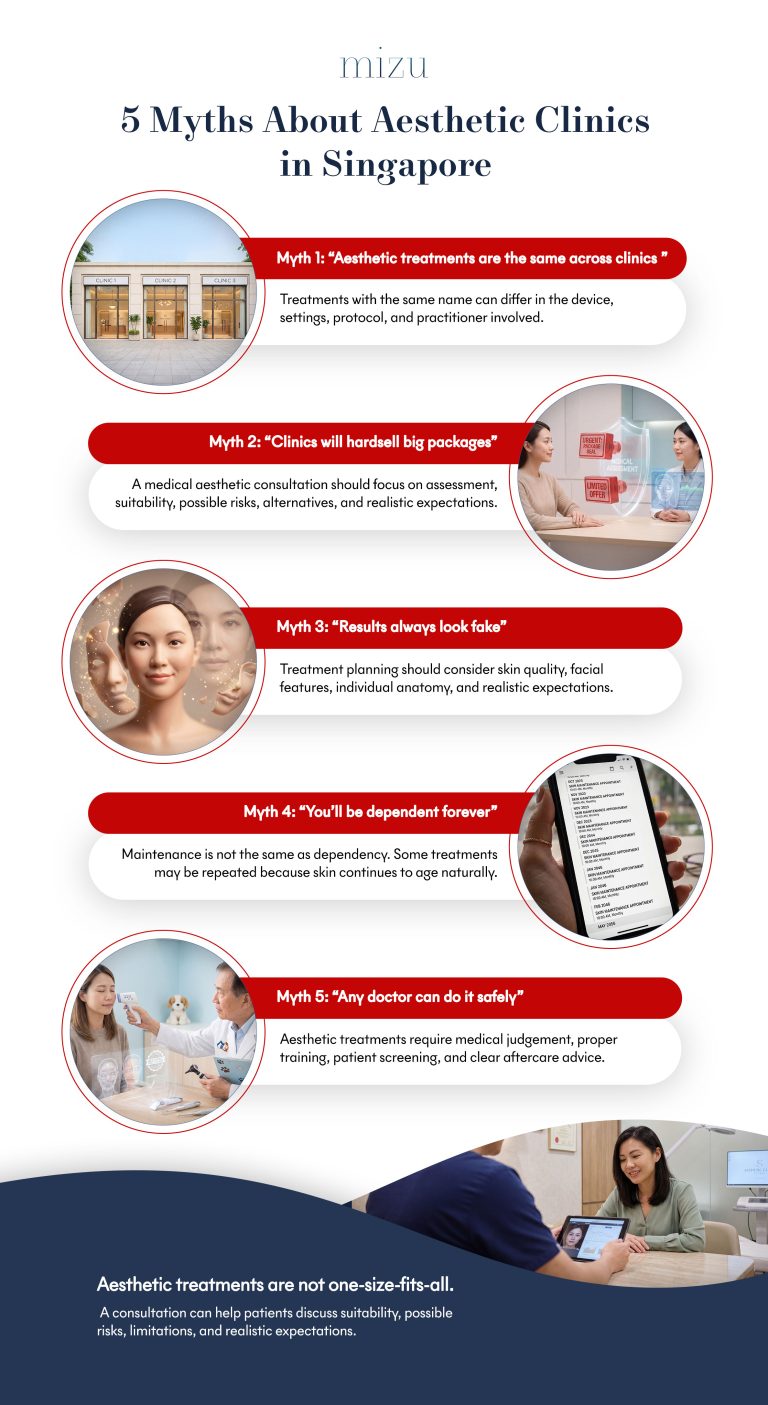
Many common beliefs about aesthetic clinics in Singapore are based on assumptions rather than how medical aesthetic practice actually works. This article addresses five common myths covering treatment cost, sales pressure, natural-looking results, treatment maintenance, and doctor qualifications. Suitability, individual assessment, and realistic expectations matter more than generalisations.
Aesthetic treatments are often discussed online in extreme ways. Some people view them as unnecessary or excessive, while others assume they are quick fixes for every skin, face, or body concern. In reality, the role of an aesthetic clinic is more nuanced.
In Singapore, aesthetic clinics provide medical aesthetic treatments that may address concerns such as skin laxity, pigmentation, acne scars, facial volume changes, wrinkles, and skin texture. These treatments may include energy-based devices, injectables, lasers, skin boosters, and other non-surgical procedures. However, not every treatment is suitable for every person, and results can vary depending on factors such as age, skin condition, treatment area, lifestyle, medical history, and the treatment method used.
If you are wondering whether aesthetic clinics are worth considering, this article addresses five common myths about aesthetic clinics in Singapore, so patients can approach consultation with clearer expectations.
Aesthetic treatments may vary depending on the device or product used, the treatment settings, the practitioner’s training and the individual’s condition. For example, different HIFU and pico laser systems may have different specifications, intended uses and operating requirements.
Even when the same type of device is used, the treatment approach may differ between clinics, including the settings selected, the areas treated and the time spent on the procedure.
Differences between clinics may include:
These factors may affect how the treatment is delivered, what it is intended to address, and the expected risks and limitations.
In addition, price alone may not provide a complete comparison. Differences in cost may reflect the treatment area, device or product used, session scope, treatment protocol, and follow-up provided.
Before proceeding, patients may wish to ask:
A consultation should clarify the device or product, treatment protocol, expected limitations, and why the proposed approach may be suitable for the patient’s concern.
Many patients hesitate to visit an aesthetic clinic because they worry they will be pressured into paying for treatments they did not plan for. This concern is understandable, especially in a wider beauty and wellness market where aggressive sales practices may exist.
A consultation should begin with an assessment by a doctor, not a pushy recommendation by sales consultants. The doctor may ask about:
From there, the discussion should cover suitable options, possible risks, recovery considerations, expected limitations, and whether treatment is appropriate.
Not every concern requires immediate treatment. For example, some pigmentation may first be managed with sun protection and appropriate topical skincare before procedural treatments are integrated. Likewise, acne control is essential before scar revision is planned.
Patients can also ask the following questions to be better informed about a particular treatment:
Patients should feel able to review the information, compare options, and decide based on suitability.
Another common concern is that aesthetic treatments will make someone look noticeably different or unnatural. This is especially common around injectables, facial contouring, and anti-ageing treatments.
However, outcomes depend on factors such as:
At Mizu Aesthetic Clinic, we believe in natural-looking results. Aesthetic treatments are meant to enhance, not change the way you look. Treatments are designed to support skin quality, hydration, firmness, tone, or add subtle volume where necessary.
For example:
Even with injectables, treatment should not follow a fixed template. Facial proportions differ from person to person. A conservative approach may involve smaller adjustments, staged treatment, fewer areas, or deciding not to treat certain areas if it may disrupt facial balance.
Some patients avoid aesthetic treatments because they worry that once they begin, they will need to continue indefinitely. This often comes from misunderstanding the difference between treatment dependence and maintenance.
Aesthetic treatments do not alter the natural ageing process; they merely slow it down. Skin continues to age due to:
If you choose to stop aesthetic treatments, the natural ageing process will continue, just as it would have otherwise. Because of this, some treatments may be recommended as maintenance to help preserve the improvements achieved over time. This does not mean the skin becomes “dependent” on the treatment. Rather, maintenance treatments are intended to help sustain results as the natural ageing process continues.
A medically guided plan should explain what is temporary, what may require maintenance, and what can realistically happen if the patient stops treatment. In many cases, stopping treatment does not make the original concern worse because of the treatment itself. The skin or facial features simply continue to change naturally with time.
Medical registration does not mean every doctor has the same training or experience in every aesthetic procedure. Treatments involving injectables, lasers, prescription products, and energy-based devices still require appropriate clinical knowledge, technical training, and patient assessment.
The aesthetic doctor should understand:
For example, injectables require knowledge of facial anatomy and blood vessel location, while laser settings need to be selected according to the patient’s skin type and condition. Energy-based treatments also require assessment of factors such as skin laxity, facial volume, sensitivity, and treatment depth.
The key point is that doctors may differ in their training and familiarity with specific procedures. Patients should check that the practitioner is appropriately qualified, explains the risks and limitations clearly, and assesses whether the treatment is suitable for them.
Aesthetic treatments in Singapore are not the same at every clinic, and treatment does not always involve dramatic changes or a lifelong commitment. At the same time, aesthetic procedures should not be treated casually. They involve medical judgement, individual suitability, realistic expectations, and a clear discussion of risks and limitations.
If you are considering an aesthetic treatment, a consultation can help assess your suitability, clarify available options, and support a decision based on medical advice rather than assumptions. You may book a consultation at Mizu to discuss your concerns with a qualified doctor.
Disclaimer: This article is for general educational purposes only and does not constitute medical advice. Treatment outcomes vary based on individual factors. The suitability and safety of any aesthetic procedure should be determined through consultation with a qualified medical professional.
Yes. Aesthetic clinics in Singapore are regulated by the Ministry of Health (MOH), and clinical procedures are governed under the Healthcare Services Act (HCSA) and must be provided by registered medical practitioners. Patients can verify a doctor’s registration via the Singapore Medical Council’s online register.
A first consultation may take 15 to 30 minutes, depending on the concern and whether multiple options are being discussed. This usually includes skin or facial assessment, medical history review, treatment options, and questions from the patient.
No. Many men also visit aesthetic clinics for concerns such as acne scars, hair loss, pigmentation, and skin texture. Suitability depends on the individual concern, not on gender.
Aesthetic clinics are medical facilities licensed under the MOH, where treatments are performed by qualified doctors. Beauty salons typically offer cosmetic services such as facials and are not authorised to perform medical procedures like injectables, prescription lasers, or energy-based devices that require medical training.
Suitability depends on factors such as your concern, skin type, age, lifestyle, medical history, and treatment goals. A consultation with a qualified doctor is the most reliable way to determine whether a particular treatment may be appropriate.
Discomfort levels vary by procedure. Many treatments use topical numbing cream, cooling, or local anaesthesia where appropriate. Your doctor can explain what to expect during and after a specific procedure.
Result timelines vary widely by treatment type. Some treatments such as injectables may show effects within days, while collagen-stimulating treatments may take several weeks to show gradual improvement. Outcomes depend on individual response.
The information provided in this blog post is for educational and informational purposes only and should not be considered medical advice. Always consult with a healthcare professional or dermatologist before starting any new skincare routine or treatment, especially if you have existing skin conditions or concerns. Results may vary from person to person, and individual needs may require different approaches.
Dr Tan Ying Zhou, known as Dr YZ Tan, is the founder and Medical Director of Mizu Aesthetic Clinic.
His journey into aesthetics began with a medical degree from St. George’s, University of London, followed by an internship in Dermatology at the National Taiwan University Hospital.
Some of his favourite aesthetic procedures include nose augmentation and anti-ageing solutions, and he also serves as a trainer for emerging aesthetic doctors.
His philosophy revolves around personalised treatments tailored to each individual’s ageing concerns, aiming to transform the ageing process gracefully into a pleasant journey towards confidence and wellness.