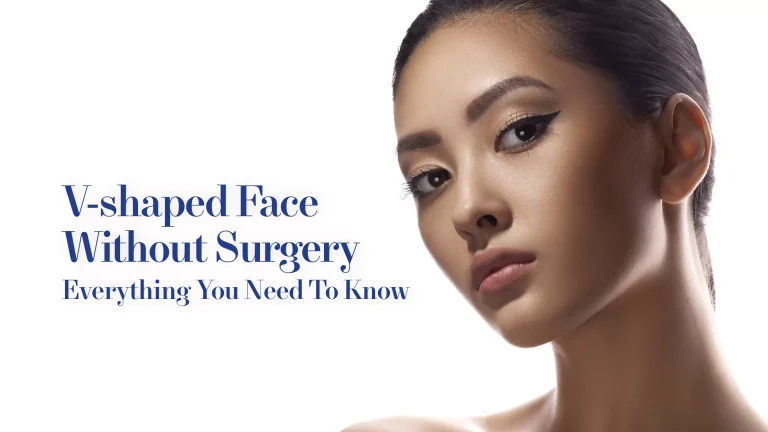
V-shaped Face Without Surgery: Everything You Need to Know

Home > Face Concerns > V-shaped Face Without Surgery: Everything You Need to Know
V-Shaped Face Without Surgery: Everything You Need to Know | Mizu

Written & reviewed by Dr Tan Ying Zhou (Dr YZ Tan) | Last reviewed: September 2026

Quick Answer:

A slimmer, more defined lower face is one of the most common requests at Mizu Aesthetic Clinic in Singapore. Dr YZ Tan assesses each patient’s individual structure, because the factors behind a less defined jawline differ from person to person, and so do the treatments that can help.


Facial shape is influenced by muscle, fat, skin laxity, and underlying bone structure. This guide explains the factors that affect lower-face contour and the non-surgical treatments, from jaw muscle reduction to fillers and lifting, that can refine it without surgery.

While beauty standards are constantly evolving, whether a face is considered attractive is something that can be backed by science. The shape and symmetry of a face are key elements of attractiveness, and when it comes to Asian beauty standards, the V-shaped face is perhaps considered the most desirable of all.

Defined by its slim cheeks, structured jawline and sharp chin, the V-shaped face is a common face shape amongst many celebrities and Korean idols. This face shape allows you to pull off most hairstyles and looks, inspiring many to desire the same facial shape for themselves.

While not everyone is naturally blessed with a V-shaped face, the good news is that modern technologies have made it possible to achieve this desirable face shape non-surgically.

Key Takeaways

  •  A V-shaped face is characterised by slimmer cheeks, a defined jawline, and a tapered chin. Whether someone has this shape naturally depends largely on bone structure, but several factors can be addressed non-surgically.
  • Common factors that work against a slimmer lower face include enlarged masseter muscles, excess fat, skin laxity, and bone or chin structure.
  • Masseter muscle reduction using botulinum toxin can slim a jaw that is wide because of enlarged chewing muscles, creating a softer lower-face contour.
  • Dermal fillers, such as chin fillers, can improve definition and balance by adjusting projection and proportion where structure is the limiting factor.
  • HIFU and other lifting treatments can tighten and lift the lower face where laxity is contributing to a less defined jawline.
  • Because the right approach depends on which factor is involved, all recommendations at Mizu Aesthetic Clinic in Singapore are individualised. A consultation with Dr YZ Tan is the starting point.

What makes a V-shaped face so desirable?

Characterised by slim cheekbones and a narrowing jawline that tapers into a V-shaped chin, this facial shape symbolises youth, femininity and elegance in Asian culture. 

The V-shaped face is highly desirable also because of its visible balance and symmetry, which are key facial traits that are deemed beautiful.

Factors hindering a natural V-shaped face

Not everyone is naturally born with a V-shaped face. While genetic bone structure plays a significant role, there are other factors that also determines your facial shape:

  • Enlarged Masseter Muscles: Often caused by genetics, excessive chewing or teeth grinding, enlarged jaw muscles can create a more square-like jaw, detracting from the feminine V-shape.
  • Recessed Chin: A lack of chin projection can make achieving a V-shaped face challenging, as it affects the balance and proportion of the jawline.
  • Sagging Skin: As we age, our skin naturally loses its elasticity and firmness due to a decline in collagen production. Factors like excessive sun exposure, smoking, and rapid weight fluctuations can accelerate skin sagging around the cheekbones and jawline. 
  • Excess Facial Fat: Genetics, weight gain, and diet can contribute to fat accumulation around the face and jawline, masking a V-shaped face even if it naturally exists.

Achieving a V-shaped face without surgery

Fortunately, achieving a V-shaped face without surgery is now possible through various non-surgical treatments:

  • HIFU (High-Intensity Focused Ultrasound): HIFU is a non-invasive treatment that uses ultrasound energy to target deep skin layers, resulting in fat burning and collagen production. HIFU is especially beneficial for those with excess facial fat and sagging skin as it helps to tighten and lift the skin for a more defined jawline.
  • Jaw muscle reduction: Jaw muscle reduction treatments relax and reduce the size of the masseter muscles, ideal for those with prominent jaws. By weakening thes muscles, they shrink in size and allow the jawline to appear slimmer and more feminine.
  • Chin fillers: Chin fillers involve administering dermal fillers into the chin area to add volume and enhance its shape, particularly for those with a recessed chin. This procedure helps to create a balanced and symmetrical V-shaped chin. The required volume will be customised by your doctor for optimal results.

Dr YZ Tan, Medical Director of Mizu Aesthetic, notes:

“When a patient asks for a slimmer, more contoured face, my first job is to work out why their lower face looks the way it does. For some it is enlarged jaw muscles, which respond well to muscle reduction. For others it is a lack of volume or chin projection, which is a filler question, and for others it is laxity, which points toward lifting. There is no single treatment that creates a particular face shape for everyone. The goal is always to work with the patient’s own structure and make balanced, proportionate adjustments rather than impose a template.”

Frequently Asked Questions

Can I get a V-shaped face naturally?

Non-surgical treatments like HIFU, jaw muscle reduction, and chin fillers can help achieve your desired facial shape, but a consultation with a doctor is necessary.

A V-shaped face is attractive due to its association with youthfulness and femininity, qualities that are scientifically proven and culturally ingrained as symbols of attractiveness.

Final Thoughts

The allure of a V-shaped face lies in its association with youthfulness and femininity, qualities highly prized in our culture and mass media. While not everyone is naturally endowed with this facial shape, non-surgical treatments like HIFU, jaw muscle reduction, and chin fillers offer effective solutions. Consulting with an aesthetic doctor is essential to determine the best treatment for your unique needs.

At Mizu, we are here to help you achieve your desired face shape. Contact us today for a consultation!

Want to find out more?
Drop us a message with your enquiries or to book a consultation.
Dr Tan Ying Zhou | Mizu Doctor
Wave Logo | Mizu

Disclaimer

The information provided in this blog post is for educational and informational purposes only and should not be considered medical advice. Always consult with a healthcare professional or dermatologist before starting any new skincare routine or treatment, especially if you have existing skin conditions or concerns. Results may vary from person to person, and individual needs may require different approaches.

Dr Tan Ying Zhou, known as Dr YZ Tan, is the founder and Medical Director of Mizu Aesthetic Clinic.

His journey into aesthetics began with a medical degree from St. George’s, University of London, followed by an internship in Dermatology at the National Taiwan University Hospital.

Some of his favourite aesthetic procedures include nose augmentation and anti-ageing solutions, and he also serves as a trainer for emerging aesthetic doctors.

His philosophy revolves around personalised treatments tailored to each individual’s ageing concerns, aiming to transform the ageing process gracefully into a pleasant journey towards confidence and wellness.

Book Your Consultation With Us